




 3 min read

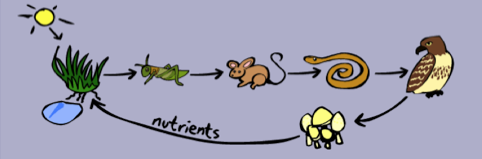
Within the natural world there exists a complex balance among living organisms known as the “food web.” Plants, animals and microorganisms are all instruments in an orchestra; each plays a crucial part in the natural symphony of life. If even one of the players is out of tune, the whole soil food web suffers. However, when everything is in order, the results are beautiful.
A healthy soil food web is very similar to the food web we all learned in middle school (see figure 1). The soil food web occurs when three key events are met.
1. All the organisms that a plant requires are present in the soil and functioning. the plant to uptake. It is one of the functions of a healthy food web to hold nutrients in non-leachable forms so they remain in the soil, until the plant requiresthem. The plant then “triggers” the right biology to convert the nutrients into forms the plant can uptake (but which are typically very leachable).
3. When the correct ratio of fungi and bacteria to protozoa (ratio of predator to prey) is present, the soil pH, structure and nutrient cycling occur at optimum rates. This produces the right forms of nutrients for the plant at the appropriate times.
One of the biggest problems our soil is facing today is a poor ratio representation of predator and prey. When we treat lawns with chemical products, the ratio typically appears as a narrow triangle (see figure 2). In this triangle, there aren’t enough predator or prey present for balance to occur or for plants to be healthy.
Protozoa, nematodes, amoeba and ciliates are examples of predators. These predators feed off of bacteria and fungi. When food and bacteria are added, the triangle enlarges and levels are increased (see figure 3). With more food sources available, balance in pH and food for each species occurs naturally.

As an individual in the lawn care world, your number one goal is to enlarge this triangle to achieve a healthy balance. How do you do this? If you remember our first entry in this blogging series entitled “The Secret to Compost Tea,” you already know the answer. Utilizing compost teas or evolved versions like Holganix Bio 800+ allows you to “feed” the predators and prey and enlarge the triangle!


.png)
.jpg)
-1.jpg)
-1.jpg)
.jpg)
-1%20(1).webp)
-831535-2.webp)
- blog (404)
- lawn care (354)
- agriculture (217)
- golf course (193)
- sports turf (190)
- holganix reviews (160)
- story (126)
- farmers (31)
- Holganix Bio 800 (30)
- soil health (26)
- Holganix Bio 800+ Revive (17)
- soil (16)
- trees (16)
- holganix case studies (15)
- Holganix Bio 800 Breakdown (14)
- webinar (13)
- Soil heath (12)
- Holganix Bio 800 Agriculture (11)
- carbon (10)
- soil microbes (9)
- HGX (8)
- crop residue (8)
- holganix results (8)
- Gratitude (6)
- core values (6)
Related Posts
 3 min read
 2 min read
 2 min read